


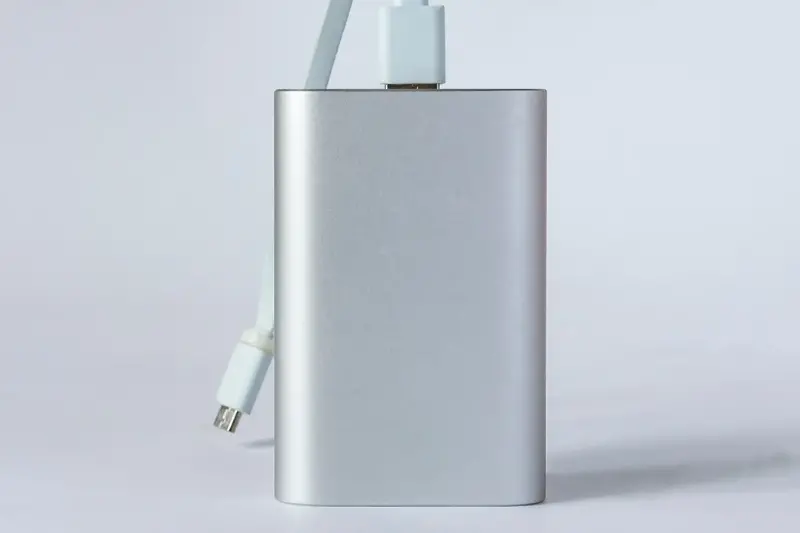
Ever sat at an airport, phone battery draining faster than you can say “boarding call”, and wondered if your trusty powerbank will get through security? You’re definitely not alone. As our lives get more mobile, portable chargers have become essential for travelers—allowing us to snap photos, navigate new cities, and stay in touch without fear of a flat battery. But bringing a powerbank on a plane is not as straightforward as tossing it into your carry-on. If you’re planning your next trip and want to make sure your powerbank won’t get confiscated at the gate, it’s crucial to know what actually makes a powerbank airport-approved.
Understanding Airport Regulations And Why They Exist
Airports don’t just love making rules for the sake of it. When it comes to powerbanks, these policies are all about safety. Powerbanks contain lithium-ion batteries—small but powerful energy storage devices. While generally very safe, lithium-ion cells can, in rare cases, overheat, catch fire, or even explode if damaged or faulty.
To minimize risks associated with these batteries, the International Air Transport Association (IATA) established detailed guidelines for passengers carrying portable chargers. Airlines and airport security worldwide follow these rules—or even have stricter ones. Understanding them can keep your journey smooth and frustration-free.
Capacity Limits: Size Definitely Matters
Unlike your shampoo, you don’t have to worry about decanting your powerbank into a 100ml bottle. But size does matter—just in a different way.
Airport regulations focus on the battery’s capacity, which is measured in watt-hours (Wh). Most airlines allow you to bring powerbanks with a capacity of up to 100Wh in your carry-on without requiring approval. If your powerbank is between 100Wh and 160Wh, you’ll need airline approval and may be limited in the number of devices. Anything over 160Wh is typically prohibited outright.
To put this in practical terms, most commercial powerbanks range from 20Wh (handy purse charger) to 80Wh (powerful laptop backup). If your charger’s rating is listed in milliamp hours (mAh) instead, you can easily convert it using the formula: Wh = (mAh × V)/1000, where V is voltage (commonly 3.7V or 5V for most small devices). A 10,000mAh powerbank at 3.7V clocks in at just 37Wh—well under the airport threshold.
How To Spot An Airport-Approved Powerbank
The airlines don’t just guess a powerbank’s capacity by holding it up to the light. To be fully compliant, your powerbank should clearly state its Wh or mAh rating on the label or casing. Security officers may request this information, and having it printed directly on your charger speeds up the process.
Some newer brands market themselves as “flight safe” or “TSA-approved,” but always check the printed specifications yourself. Remember: if a powerbank’s capacity isn’t clearly marked, it might get confiscated regardless of the actual size.
Pack Smart: Carry-On Over Checked Baggage
You might think hiding your powerbank in checked luggage is a clever move, but it’s actually not permitted—and for good reason. Powerbanks should always travel in your carry-on bag.
Lithium-ion batteries can generate heat, and if a thermal accident occurs in the cargo hold, it’s much harder for crew to respond. When your powerbank is in the cabin, issues like overheating or swelling can be dealt with immediately. Security may spot-check your hand luggage, so keep your powerbank easily accessible whenever possible.
One Powerbank Or Many: How Many Is Too Many?
For gadget lovers who travel with multiple devices, quantity becomes another consideration. Most airlines allow you to bring up to two spare batteries or powerbanks between 100Wh and 160Wh, in addition to devices under 100Wh, but individual policies can vary. If you’re carrying more than two large-capacity units or planning to travel with several smaller ones, always check with your specific airline before flying to avoid unpleasant surprises.
Exceptions, Alternatives, And Good Habits
It’s worth noting that some countries and airlines enforce stricter rules than the IATA minimums. For example, flights into and out of China, India, or Australia often have their own quirky restrictions. You might also encounter more rigorous inspections on routes with enhanced security.
If your powerbank is oversized or unlabelled, consider alternatives like renting a portable charger at the airport or investing in a travel-friendly, fully certified model for next time. It’s also a good opportunity to tidy up that electronics pouch—dispose of worn powerbanks responsibly, and store devices in individual pouches to avoid accidental short-circuits.
Keeping Your Travels Powered Up And Hassle-Free
In today’s always-connected world, a reliable powerbank is almost as essential as your passport. Understanding the rules for what makes a powerbank airport-approved ensures a hassle-free journey, whether you’re off for a beach escape or a busy business trip.
By remembering the limits—generally under 100Wh, clearly labeled, and carried in hand luggage—you’ll breeze through security and keep your devices charged at every layover. Check the details for your specific airline and destination, and you’ll never have to surrender your favorite charger at the gate again.
Safe travels, and may good signal (and a full battery) always be with you!