



The Untold Allure: Why the Mazda RX-7’s Rotary Engine Still Captivates Enthusiasts Worldwide
What if one of the car world’s most persistent legends was hiding not under a hood, but inside a spinning metal triangle?
Picture yourself on a quiet urban street, engine idling beneath you. There’s a pulsing hum unlike anything you’ve heard before. It isn’t the standard thrum of pistons; it’s silkier, almost aircraft-like. This is the Mazda RX-7’s beating heart: the rotary engine, a piece of automotive magic whispered about in workshops and fan forums alike. So, what makes this engine so legendary, and why do petrolheads from Singapore to Switzerland still chase its unique thrill? Join us as we journey into the secretive powerplant that turned the RX-7 into a modern-day myth.
A Legend Born from a Radical Idea
Mazda’s rotary, or Wankel, engine is the stuff of automotive folklore. It didn’t follow the crowd. While the world clung to conventional pistons bouncing up and down, the RX-7 dared to revolve, not reciprocate.
In the 1970s, engineers in Hiroshima wanted something lighter, smoother, and altogether different - the result was a compact engine making more power for its weight than almost anything in its class.
Imagine this: under the RX-7’s sculpted bonnet lies an engine barely bigger than a carry-on bag yet capable of propelling you into the horizon with a banshee wail.
Why Does This Engine Feel So Alive?
Ask anyone who’s driven an RX-7 and their eyes light up. The rotary engine spins high, revving with an enthusiasm you can feel in your bones.
Here’s why drivers keep coming back:
- Lightning-quick throttle response: No heavy internal pistons mean acceleration feels almost instantaneous.
- A uniquely smooth character: The rotary craves to keep spinning, delivering a linear surge that begs you to push it further.
- Musical exhaust note: That signature rotary exhaust burble - a blend of metallic rasp and otherworldly hum - is instantly recognisable and deeply addictive.
For the driver, it means every gear change and press of the throttle isn’t just an action, but an event. You’re not just driving; you’re flying low, accompanied by a soundtrack tailor-made for steel and adrenaline.
The Marvel of Simplicity (and its Trade-offs)
The rotary’s secret is its elegant simplicity. With only a handful of moving parts (fewer than a conventional engine), there’s less weight and friction. It’s a minimalist’s dream, wrapped in complex geometry.
The engine’s unique design brings benefits:
- Lightweight construction: Helps create the RX-7’s celebrated 50-50 weight distribution, giving it razor-sharp handling.
- Compact size: Allows for a lower cowl and bonnet, contributing to the RX-7’s svelte proportions and low center of gravity.
- High-revving thrills: The rotary doesn’t just tolerate high RPMs, it craves them.
But, as with any legend, the rotary has its quirks. Fuel economy is thirsty, and oil consumption is part of the ritual. Reliability, while impressive given its power density, requires devotion. These trade-offs only deepen the appeal for those who see cars as partners, not just machines.
Why Does the RX-7’s Rotary Still Fascinate Decades Later?
For many, the RX-7 isn’t simply a sports car; it’s an invitation. You’re beckoned to join a club of die-hards who pursue purity of motion over mainstream practicality.
In a world now dominated by hybrids and crossovers, the RX-7’s rotary glows like a rare neon sign on a foggy night. To own, drive, or even sit inside an RX-7 is to step inside a story, one written with every precisely measured apex and every midnight fill-up.
- Global cult following: From Singapore’s winding mountain roads to Ireland’s damp green lanes, rotary meetups still fill parking lots.
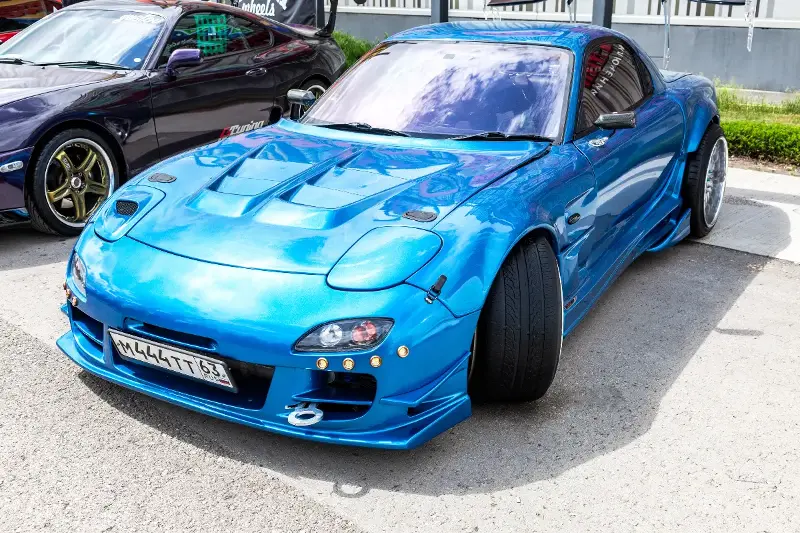
- Tuning culture nirvana: Owners love the platform for its tuning potential - a little boost, a little porting, and suddenly you’ve got a bespoke rocket.
- A sensory feast: The engine’s hum, the tactile controls, and the signature styling make every journey a celebration.
Is the Rotary’s Song Truly Over?
Mazda’s rotary engine was always more than the sum of its parts. It was a statement: that driving could be different, not just faster or more efficient. As emissions standards evolve and electric motors take over, some wonder if the rotary’s song fades for good.
Yet whispers persist. Mazda teases with new rotary concepts, and RX-7 values keep climbing. Even in garages with the newest EVs, there’s still room for stories of that otherworldly whirr.
So, ask yourself: is the magic of the RX-7’s rotary simply nostalgia, or is it a blueprint for how passion can outlast fashion? After all, legends are never really about perfection - they’re about chasing the thrill that keeps you up at night.
Maybe, just maybe, that singular engine hum will echo for another generation to discover. Would voi answer its call?